TL;DR
Digital channels are fatiguing — open rates fall, inboxes overflow, social reach narrows. One channel is going the other direction: direct mail with a real personal touch. Most 'personalized' mail isn't — printed cards with fake handwriting and business return addresses get tossed at the recycling bin and average a 1–1.5% response rate. A real handwritten card with a hand-addressed envelope, a real stamp, and no return address gets opened, read, and remembered (90%+ read rate, ~2:1 ROI). LyncCIS uses AI–Real Ink technology to write a custom message per recipient, hand it with real pen and ink, and mail it — at scale — so one agent can run personal campaigns across an entire book of business.
Why it matters
Digital is loud. Personal is what gets opened.
Email open rates keep slipping. Social reach is rented. SMS is noisy. The agents getting through aren't shouting louder — they're showing up differently. A small envelope, hand-addressed, with a real stamp, lands on a kitchen counter and gets read before the bills.
The problem with most 'personal' mail is that it isn't. Printed cards with fake script fonts, a business return address, and a standard A10 envelope read as marketing in under a second. Industry response averages just 1–1.5% — and without an exceptional offer, ROI is hard to come by.
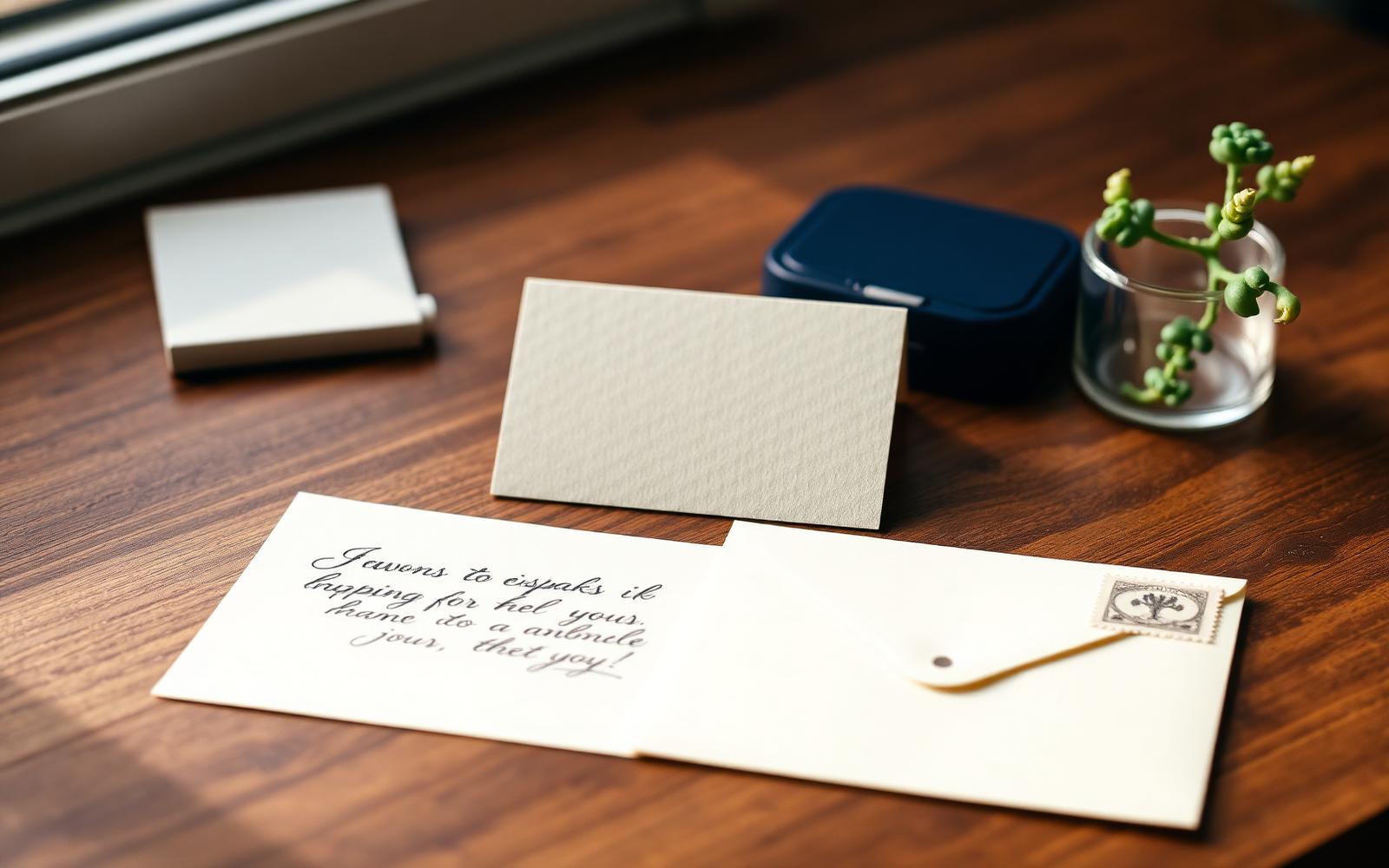
Real handwritten mail flips the equation. No return address creates curiosity. Real ink creates trust. A premium 4x6 card creates a moment. The result: a 90%+ read rate and an average 2:1 return on investment.
0%+
read rate on real handwritten cards with no return address — versus 1–1.5% response on traditional prospecting mail
Source: DMA Response Rate Report 2024 (baseline) · LyncCIS field data (handwritten)
The shift back to personal — at scale
The instinct used to be: send more digital. The cost was low, the volume was infinite, the data was clean. But every other agency had the same instinct, and the inbox filled up. The marginal cost of an email is near zero, and so is the marginal attention it earns.
Handwritten mail does the opposite. It's costlier per piece, slower to produce, harder to fake. Which is precisely why it works — it carries a signal that a printed mailer can't fake. The only thing that ever held it back was scale. AI–Real Ink technology removes that ceiling.
Why a real handwritten card outperforms
Psychology of intrigue
A hand-addressed envelope with a real stamp and no return address triggers curiosity — the client opens it before they categorize it as marketing.
- Use a small envelope (not A10 / postcard) — uncommon shape gets noticed
- Hand-address the front — never a printed label
- Use a real first-class stamp — metered mail signals 'business'
- Skip the return address — curiosity drives the open
- Keep the message human — three sentences beats three paragraphs
Tooling note · If a client can tell it's marketing from across the room, you've already lost the open. The envelope is the campaign.
Messages that actually matter
Anchor handwritten touches to moments where a card carries weight — renewals, thank-yous, reviews, referrals, mid-year check-ins, win-backs.
- Send after every enrollment — a thank-you within 7 days
- Send at the policy anniversary, not just at AEP
- Use it for review and referral asks — the response rate doubles
- Send a mid-year 'just checking in' card to your top 20% of clients
- Run a win-back card to lapsed clients each spring
Tooling note · Handwritten works because of context, not novelty. Don't burn the channel on cold blast prospecting.
AI–Real Ink writes for you
An AI agent drafts a custom message per recipient. Robotic writing bots holding a real pen handwrite it in real ink on a premium 4x6 card. The card is inserted, addressed, stamped, and mailed — at campaign scale.
- Connect your CRM segments — let the AI write per recipient, not per template
- Review the first batch of generated messages before scaling — trust, then verify
- Lock in tone guardrails (no slang, no claims, no plan-specific language)
- Keep one human-only signature line — yours, your name
- Re-prompt the AI seasonally so the language stays fresh
Tooling note · The AI is the scribe. You are still the agent. Define the voice — let the system carry it.
Drive action, track results
Add a custom QR code on the card to your calendar, review page, or referral landing page. Every scan, click, and booking is logged inside the system — communication you can actually measure.
- Generate one unique QR code per campaign — never reuse
- Land the QR on a mobile-first page (it's being scanned on a phone)
- Tag inbound calls and bookings to the campaign in the CRM
- Compare cost-per-card to cost-per-booking, not cost-per-piece
- Review campaign-level ROI quarterly and prune what underperforms
Tooling note · A handwritten card without a tracked CTA is a gift. A card with one is a growth engine.
Tangible returns
Agents running handwritten campaigns through LyncCIS see an average 2:1 ROI — measured, not estimated. The channel pays for itself when used on the right moments and the right segments.
- Pick three campaigns to test first: thank-you, renewal, referral ask
- Hold one segment as a control — measure the lift, not just the response
- Budget per campaign, not per channel — track ROI campaign-by-campaign
- Reinvest into the campaigns that beat 2:1; cut the ones that don't
- Pair handwritten with email + SMS for a layered, not redundant, cadence
Tooling note · Personal beats automated when it's authentic. AI–Real Ink keeps it authentic at volume.
Bonus insight
Bonus insight — the channel nobody can spam
Inboxes get spam filters. Phones get robocall blockers. Mailboxes get cards. The reason handwritten still wins is precisely because the cost and craft keep the channel from being flooded — and that scarcity is the moat. Use it like one.
Traditional mailers vs. AI–Real Ink handwritten
Timeline
A 30-day handwritten rollout
Step 01
Week 1 · Pick the moment
Choose one anchor campaign to test first — thank-you after enrollment is the easiest win. Define the segment, the message intent, and the call to action (calendar, review, referral).
Step 02
Week 2 · Generate and review
Run a small batch of 25–50 AI-generated messages and review every one. Lock the tone, the signature, the CTA. Approve the template language for compliance.
Step 03
Week 3 · Ship and track
Send the first real batch with a tracked QR code on the card. Log every inbound call, scan, and booking against the campaign in your CRM.
Step 04
Week 4 · Measure and scale
Compare campaign ROI to your control segment. If it beats 2:1, expand the audience. Add a second campaign — review asks tend to be the next-easiest win.
Step 05
Ongoing · Layer it in
Stack handwritten onto the moments digital can't carry. Renewal, anniversary, win-back, top-20% mid-year check-in. Keep the channel scarce — that's what keeps it working.
People don't just want information. They want to feel seen. Make your message personal. Make your results undeniable.
Handwritten direct mail — readiness checklist
Key takeaways
- Most 'personalized' mail averages 1–1.5% response — it looks like marketing, so it gets treated like marketing.
- Handwritten cards with no return address and a real stamp see 90%+ open/read rates and an average 2:1 ROI.
- AI–Real Ink technology removes the bottleneck: a custom message per recipient, written by a robot holding a real pen.
- Use the channel where it matters most: renewals, thank-yous, review asks, referrals, mid-year touchpoints, win-backs.
- Start personal campaigns before AEP — by October you want the relationship already warm, not the introduction.
Frequently asked
FAQs
- Why does handwritten mail outperform standard direct mail?
- Standard mailers signal 'marketing' the moment they hit the mailbox — a business return address, a postcard format, a printed font. They get sorted into the recycling pile in seconds. A small envelope with a real stamp, a hand-addressed front, and no return address signals 'someone wrote to me.' It gets opened — industry data shows 90%+ open rates versus 1–1.5% response on traditional prospecting mail.
- Isn't handwriting cards at scale impossible for a Medicare agent?
- It was, until AI–Real Ink technology. LyncCIS uses AI to write a custom message for each recipient and AI-driven writing bots that handwrite the message in real ink on a premium 4x6 greeting card. The card is inserted into a small envelope and hand-addressed. You get the look and feel of a personal note at the scale of a campaign.
- When should I use handwritten mail in the AEP cycle?
- Anchor it to high-emotion, high-trust moments — renewals, thank-yous after enrollment, post-meeting follow-ups, review and referral asks, mid-year check-ins, and win-back campaigns for lapsed clients. Avoid using it as cold prospecting blast mail; the magic is contextual relevance, not novelty.
- How do I measure the ROI of a handwritten campaign?
- Add a custom QR code on the card linking to your calendar, a review page, or a referral landing page. Track scans, calls, and bookings the same way you would a digital campaign. Agents using LyncCIS see an average 2:1 ROI on handwritten campaigns — measurable, not anecdotal.
- How early should I start handwritten campaigns before AEP?
- Start by August at the latest. Print, write, and mail cycles take days, and the goal of a personal campaign isn't to introduce yourself in October — it's to be the agent the client already trusts when October arrives. Pre-AEP thank-yous and mid-year check-ins do the heavy lifting.
Authoritative sources
Related reading
From the printed guide
This lesson's one-pager
Preview the printed page for this lesson, or download just this page as a standalone PDF.
From the 2026 Readiness Guide
Lesson 08 — printable one-pager
Keep going

.png)