TL;DR
Events are one of the best ways to meet Medicare prospects, and one of the easiest places to leak them. Paper sign-in sheets get buried, memory fades, and follow-up falls through. Modern intake fixes it: QR-code opt-in, text-to-join keywords, and short digital forms map every contact into the CRM with proper consent, tags, and source tracking. From there, automation handles the right email or SMS, surfaces a calendar booking, and reports the ROI by event. The result: more leads captured, faster follow-up, secured consent, and measurable revenue per event.
Why it matters
Great events create conversations. Great follow-up creates business.
Events are one of the best ways to meet prospects — but most opportunities are lost after the event ends. Contact forms get buried, memory fades, and follow-up never happens.
Today's consumers expect quick, easy, digital ways to connect. A modern intake and automation system captures consent, starts the right conversations, and stays compliant — without slowing down your event.
The agents who win AEP treat every event like the start of a relationship, not the end of a conversation.
0 min
target time between an event capture and the first automated touch — the window where intent is still hot
Anything longer and the conversation goes cold
Modern intake is consent at the speed of attention
Paper sign-in sheets weren't built for the way today's clients move. By the time a hand-written name gets typed into a spreadsheet — usually the next morning — the intent that drove someone to write it down has already faded.
Digital intake closes that gap. A scan, a text, or a short form captures who they are, what they came in for, and how they consent to be contacted — in the same second they decide to act.
Modern ways to capture consent at any event
QR-code opt-in
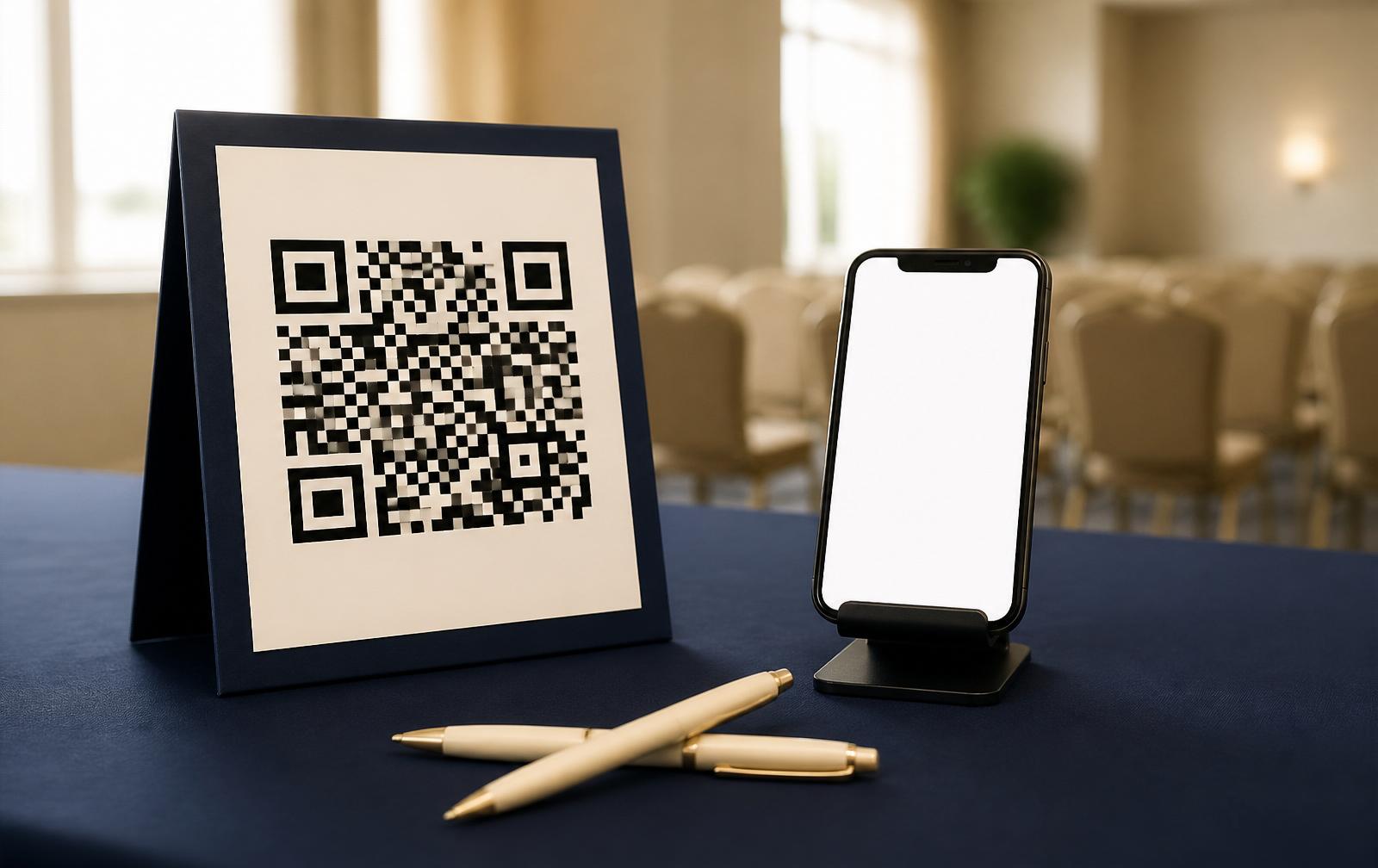
Fast, frictionless, and increasingly expected. One scan opens a branded intake form and connects the prospect to you with consent captured at submission.
- Print the QR on a clean tabletop sign — easy to scan from three feet away
- Land it on a mobile-first intake page (no pinch-zoom required)
- Use a unique QR code per event so source tracking is automatic
- Keep the form to 5 fields or fewer — name, contact, consent, interest, optional question
- Test the scan + submit flow on your own phone before doors open
Tooling note · If a guest needs help scanning, the friction is in the sign — not the guest. Bigger code, less text.
Text-to-join keyword
Text a keyword to instantly opt in and receive information. Simple, effective at any event, and the backup channel for guests who don't scan.
- Pick a short, memorable keyword (one word, easy to spell)
- Use a registered A2P 10DLC number so messages actually deliver
- Auto-reply with a single tap to your calendar or intake form
- Capture explicit consent in the welcome reply
- Track inbound keywords by event so source attribution stays clean
Tooling note · Texting feels casual because it is. Keep the auto-reply human — one sentence, one link.
Short digital intake form
Collect what you need with a short branded form — contact info, interests, preferred channel, and consent. Less paper, more signal.
- Mirror the exact fields your follow-up automation needs (no orphan data)
- Make consent a checkbox, not fine print — store it with timestamp
- Ask one 'how can we help?' question to route the follow-up
- Show a clear thank-you screen with the next step (book / browse / call)
- Pre-fill source = event name so it lands tagged in the CRM
Tooling note · A 30-second form beats a 30-line paper card every time. Cut every field you don't actually act on.
Automation takes over
The right email or SMS campaign fires within minutes — based on interest and channel consent — while the conversation in the room is still fresh.
- Map each 'how can we help?' answer to a follow-up sequence
- Respect the consented channel — email-only stays email-only
- Send the first touch within 5 minutes of submission
- Hand high-intent leads (booking link clicked) to a human within 24 hours
- Suppress duplicates if the same contact submits more than once
Tooling note · Speed beats polish. A simple thank-you in 5 minutes beats a beautiful email the next morning.
Track every step and the ROI
Opens, clicks, replies, bookings, and enrollments — all in one place, tagged to the event so cost-per-appointment and cost-per-enrollment are answerable.
- Tag every contact with event name + date + venue
- Capture UTM parameters on every link in the follow-up
- Log every inbound call and reply against the contact record
- Build a per-event dashboard: scans → submits → appointments → enrollments
- Compare event cost to enrolled revenue within 30 and 90 days
Tooling note · You can't repeat what worked if you can't measure it. Tag at intake; report at month-end.
Bonus insight
Bonus insight — the table is the funnel
Your intake table is the top of the event funnel. Treat the sign, the QR, the keyword, and the form like a single conversion surface — clean, easy, fast — and measure it the way you'd measure a landing page.
Paper intake vs. modern event capture
Timeline
How it works in practice
Step 01
1 · They opt in
Prospects scan your QR code, text your keyword, or complete your digital form — whichever fits the moment.
Step 02
2 · Data captures instantly
Information maps directly into the CRM with the right tags, consent status, and source attribution — no re-typing.
Step 03
3 · Automation takes over
The right email or SMS campaign is triggered immediately based on interest and channel consent.
Step 04
4 · They take action
Trigger links, QR codes, and calendar booking make it easy for the prospect to schedule a consultation or ask a follow-up question.
Step 05
5 · You see the results
Track opens, clicks, responses, appointments, and ROI — by event, by channel, by producer — all in one place.
The best events don't end when the room clears. They keep working — because your follow-up is automatic.
Event intake — pre-event readiness checklist
Key takeaways
- Most event opportunities are lost after the event, not during it — paper intake is the leak.
- Modern intake = QR opt-in + text-to-join + a short digital form. Pick the mix that fits the room.
- Every capture must land in the CRM with consent, source, and tags — or it's just a list.
- Automation triggers the right email or SMS within minutes, not days.
- Tracked CTAs (QR codes, calendar links) make event ROI measurable per event, per channel.
Frequently asked
FAQs
- Why do most event opportunities get lost?
- Because the work after the room clears is manual. Paper forms get stacked, business cards get rubber-banded, memory fades, and follow-up depends on someone finding time the next morning. Modern intake removes the manual step — capture happens in the moment, follow-up is triggered automatically.
- What's the easiest modern intake to start with?
- A QR code on a tabletop sign that links to a short branded digital form. It's fast, frictionless, increasingly expected, and one scan connects the prospect to you with consent captured at submission. Add a text-to-join keyword as a backup channel for guests who'd rather text than scan.
- How does this stay CMS-compliant?
- Consent is captured at submission, the source is tracked, and the channel of communication the prospect agreed to is stored on the record. The CRM enforces the consent boundary — email-only contacts only receive email, SMS-only contacts only receive SMS. Disclosures live on the form, not in the agent's memory.
- How fast should follow-up happen?
- Within minutes. The right first touch — a thank-you email, a 'helpful resource' SMS, a one-tap calendar link — should fire automatically as soon as the form is submitted, while the conversation in the room is still fresh. Same-day human follow-up should happen within 24 hours.
- How do I measure event ROI?
- Tag every intake with the event name and source, track every QR scan and form submission, and follow the contact through to appointment and enrollment in the CRM. You should be able to answer 'what did this event cost per booked appointment and per enrollment?' before the next event is planned.
Authoritative sources
Related reading
From the printed guide
This lesson's one-pager
Preview the printed page for this lesson, or download just this page as a standalone PDF.
From the 2026 Readiness Guide
Lesson 09 — printable one-pager
Keep going
.png)